Chapter 1
Notes + Exercise LinkHistory of Chemistry
Notes on the discovery of the atom, Maxwell's Demon experiment, Schrodinger's Cat experiment, Al-Ghazali's historical background, and inductive/deductive reasoning.
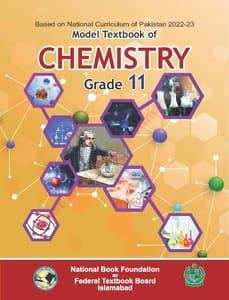
Master Class 11 Chemistry (HSSC-I) with the latest SLO-based solved notes, chapter summaries, MCQs, short questions, long questions, and PDF downloads aligning with the NBF textbook.
These Class 11 Chemistry solved notes for Federal Board (FBISE) provide students with comprehensive, SLO-based exam preparation material. Based on the latest National Book Foundation (NBF) textbook, this resource includes chapter-wise solved textbook exercises, conceptual MCQs, short-answer questions, and detailed long-answer questions to ensure high scores in the HSSC-I board exams.
Select any chapter to read online or download the PDF notes for exam preparation.
Notes on the discovery of the atom, Maxwell's Demon experiment, Schrodinger's Cat experiment, Al-Ghazali's historical background, and inductive/deductive reasoning.
Explores sub-atomic particles, behavior in electric fields, atomic/ionic radius, quantum numbers, electronic configuration rules, shapes of orbitals, ionization energy trends, and mass spectrometry.
Study electronegativity trends, dipole moments, polar/nonpolar bonds, bond energy, VSEPR theory shapes, Valence Bond Theory (VBT), hybridization types, and Molecular Orbital Theory (MOT).
Covers mole concepts, molar volume, stoichiometric calculations, limiting and non-limiting reactants, theoretical/actual/percent yield, and dosage/medicinal stoichiometry.
Detailed notes on the kinetic molecular interpretation of liquids, physical properties of liquids (viscosity, surface tension, boiling point), phase change energetics, gas properties, and types/properties of solids.
Explore thermochemical reactions, enthalpy changes, standard heat of reaction, bond energy, Hess's Law, Born-Haber cycle, entropy, and Gibbs free energy calculations.
Study reaction rates, rate laws, order of reaction, reaction mechanisms with potential energy diagrams, activation energy, catalysis, and Gibbs free energy feasibility.
Covers macroscopic/microscopic events, dynamic equilibrium, law of mass action, equilibrium expressions, recognizing equilibrium, Le Chatelier's principle, and industrial applications (Haber's & Contact processes).
Notes on conjugate acid-base pairs, Lewis concept, pH calculation, indicators and titration, buffer solutions, salt hydrolysis, solubility product, and common ion effect.
Explores periods/groups, blocks of elements, metal/non-metal trends, periodicity of properties, variation in oxidation states, and reactions of chlorides and oxides.
Detailed study of nitrogen chemistry, oxides, smog formation (PAN mechanism), nitrification/denitrification, properties of sulphur, contact process, and sulphuric acid reactions.
Study halogen volatility, bond strength, reactivity with hydrogen, thermal stability of hydrogen halides, acidic strength, and halide ion reactions with various reagents.
Covers air pollution, atmosphere layers, smog types, acid rain, air quality index (AQI) monitoring, laws/regulations (Clean Air Act), greenhouse effect, and global warming issues.
Explores point/non-point sources, agricultural and industrial pollutants, water treatment methods (raw/wastewater), laws/regulations in Pakistan, and water conservation strategies.
Notes on catenation, structural representations (skeletal, condensed, stereochemical), functional groups, nomenclature of aliphatic organic compounds, reaction reagents/fissions, and reaction types.
Study open/closed chain hydrocarbons, alkane reactivity, ethene structure/reactivity, preparation/reactions of alkenes, redox organic reactions, and stereoisomerism.
Covers classification of primary/secondary/tertiary alkyl halides, physical properties, preparation from alcohols/alkanes/alkenes, bond polarity/energy, and SN1/SN2/elimination reactions.
Detailed study of monohydric alcohols, electrophilic addition/substitution preparations, acidity of alcohols, and reactions (combustion, iodoform, esterification, oxidation).
Explore preparation of aldehydes and ketones, base/acid catalyzed nucleophilic addition reactions, tollens'/fehling tests, and preparation/reactivity/reactions of carboxylic acids.
Notes on amine classification, physical properties, preparation from alkyl halides/nitrogen groups, basicity of ammonia/methylamine, and reactions with nitrous acid.
Study multi-step synthetic routes, functional group identification tests (bromine water, iodoform, DNPH, Tollens), key synthesis reagents, and retrosynthetic analysis.
Covers petroleum and natural gas origin/refining, building blocks of petrochemical technology, nuclear energy, solar energy mechanism, carbon footprint, and energy sources comparison.
These Class 11 Chemistry Notes for Federal Board (FBISE) are designed to provide intermediate pre-engineering and pre-medical students with a top-tier learning companion. Aligned with the latest National Book Foundation (NBF) curriculum, these notes break down complex chemical concepts, equations, and mathematical calculations into clear, understandable sections. Whether you are dealing with the intricacies of quantum numbers or the mechanisms of organic synthesis, this resource ensures you have a comprehensive guide at your disposal.
To excel in the HSSC-I annual exams, students need more than just rote learning. Under the new Student Learning Outcomes (SLO) guidelines, the Federal Board exams assess deep conceptual understanding, practical application, and problem-solving skills. These notes are meticulously structured to match this SLO criteria, providing solved textbook questions alongside additional conceptual questions that frequently appear in board papers. Key mechanisms, derivations, and numerical problems are explained step-by-step to build your confidence.
In addition to subjective answers, these chemistry notes include a dedicated focus on objective preparation. Students will find solved MCQs with detailed reasoning, short-answer questions highlighting critical terms, and structured long-answer questions complete with reaction pathways and molecular diagrams. For offline study, individual chapter notes are available for download in PDF format, making it easy to revise the entire syllabus before your exams.
Our Class 11 Chemistry notes serve as a complete study guide tailored specifically for the FBISE syllabus. These notes act as a bridge between the NBF textbook and the actual board exam requirements. Every topic is explained using simple yet scientifically accurate English, making it accessible to all students. From physical chemistry principles like stoichiometry and thermodynamics to the detailed properties of inorganic and organic elements, these notes cover all aspects of the HSSC-I Chemistry curriculum.
Unlike generic guides, this resource is designed by experienced educational specialists who understand the FBISE marking scheme. We place special emphasis on writing precise definitions, balancing chemical equations, and outlining reaction mechanisms. Important comparisons (such as ionic vs. covalent bonds or SN1 vs. SN2 mechanisms) are presented in tabular formats for quick reading and memorization.
By studying these chapter-wise notes regularly, you can expect to master the following key areas of Class 11 Chemistry:
Students can use the chapter-wise material to access the following learning resources:
Complete, step-by-step solutions to all textbook review questions and numerical problems.
Conceptual multiple-choice questions to help you secure full marks in the objective section.
Precise, exam-focused answers to short-answer questions highlighting key chemical terms.
Detailed, structured long answers with proper headings, reaction equations, and bullet points.
Clear and accurate definitions of all key terms, laws, and chemical principles.
High-quality, labeled molecular structures, orbital shapes, and experimental setups.
Conceptual and application-based questions designed to challenge and prepare you for FBISE papers.
Free chapter-wise PDF downloads for offline studying, quick revision, and easy printing.
These Class 11 Chemistry notes are fully aligned with the Single National Curriculum (SNC) and the National Curriculum framework adopted by the Federal Board. They follow the National Book Foundation (NBF) textbook structure, ensuring 100% compliance with student learning outcomes (SLOs). This alignment guarantees that students are studying the exact topics required for their HSSC-I annual exams.
Follow this simple preparation method to get better results in Chemistry.
Start by reading the textbook chapter to understand the basic flow and vocabulary of the topic.
Use our notes to clarify difficult chemical concepts, definitions, and mathematical equations.
Attempt the chapter-wise multiple-choice questions to test your conceptual clarity and speed.
Learn how to write precise, high-scoring answers to short-answer questions using proper scientific terms.
Study the structure of long questions, focusing on headings, balanced equations, and mechanisms.
Draw orbital shapes, molecular geometry diagrams, and experimental setups to secure full marks.
Go through the summary points and solved exercises right before your tests and final board papers.
Use these resources to complete your Chemistry preparation and other subjects.
Yes, these solved notes are fully updated for the 2026-2027 academic session and align with the National Book Foundation (NBF) textbook for HSSC-I Chemistry.
Student Learning Outcomes (SLO) based notes focus on conceptual learning, application of principles, and analytical reasoning (such as predicting products or mechanisms) rather than rote memorization, helping you tackle the new FBISE exam format.
Yes, individual chapter notes including solved exercises, MCQs, and conceptual short/long questions are available for free PDF download on their respective pages.
Absolutely. All textbook numericals, example problems, and additional conceptual calculation questions are solved step-by-step with clear formulas and units.
Yes, Chapters 15 to 21 cover the organic chemistry portion thoroughly, providing detailed reaction mechanisms, structural formulas, IUPAC nomenclature rules, and retrosynthetic analysis guides.
Yes, all molecular shapes from VSEPR theory and energy level diagrams from Molecular Orbital Theory (MOT) are included with clear illustrations and explanation of bond angles.
Yes, these notes follow the guidelines of the National Curriculum framework approved by the Ministry of Education for Federal Board intermediate students.
Yes, since the fundamental chemical concepts and major parts of the syllabus are identical across Pakistan, Punjab Board students can benefit from these notes, though they should check their specific book chapters.
By focusing on the conceptual roots of chemistry (such as hybridizations, thermodynamics, and kinetics) and presenting solved conceptual MCQs, these notes build a solid foundation for competitive medical and engineering exams.
Yes, all definitions, laws, and chemical statements are written concisely using standard scientific terminology to ensure you get full credit from board examiners.
Simply scroll up to the chapter list section on this page, and click the 'Notes + Exercise Link' for the chapter you want to study. It will take you to the detailed page for that chapter.
Yes, all study resources, notes, guides, and PDF downloads on StudyPlusPlus are 100% free of charge for students and teachers.
Start by reading the NBF textbook. Then, clarify your concepts using these notes, practice drawing orbital and molecular structures, solve all numerical exercises, and practice writing balanced chemical equations.