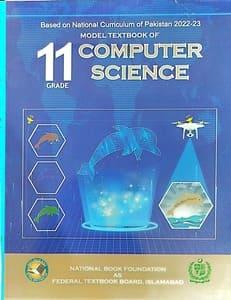
Class 11 Computer Science Notes Federal Board (FBISE)
Master Class 11 Computer Science (HSSC-I) with the latest SLO-based solved notes, chapter summaries, MCQs, short questions, long questions, and PDF downloads aligning with the NBF textbook.
Federal BoardClass 11HSSC-IComputer ScienceEnglish MediumSession 2026-2027SLO BasedSNC AlignedNBF TextbookChapter-Wise Notes
Quick Answer
These Class 11 Computer Science notes for Federal Board (FBISE) offer comprehensive, SLO-based exam preparation material. Based on the latest National Book Foundation (NBF) curriculum, they cover chapter-wise solved exercises, conceptual MCQs, short questions, long-answer questions, and python programming exercises to help HSSC-I students achieve top marks in their board exams.
Chapter-Wise Computer Science Notes
Select any chapter to read online or download the PDF notes for exam preparation.
Chapter 1
Computer Systems
Explore digital computer data representation, analog/digital signals, logic gates, truth tables, Boolean function simplification using K-Maps, Software Development Life Cycle (SDLC) models, network topologies, cloud computing, and cybersecurity threats and protection mechanisms.
Learn about computational artifacts design and evaluation parameters. Master sorting algorithms (insertion, bubble sort) and searching algorithms (binary, linear search) to develop efficient computational solutions.
Master statistical modeling techniques (data gathering, supervised/unsupervised learning, regression, classification models) and experimental design. Learn python data analysis and visualization using matplotlib scatter plots, bar charts, boxplots, and pie charts.
Introduction to Internet of Things (IoT) technologies (WSNs, embedded systems), and blockchain networks and cryptography. Analyze the societal impacts, positive/negative effects, and conflicting requirements of AI systems.
Evaluate credibility, bias, and copyright of information sources. Understand human bias in data, human vs. computer verification tasks, and the environmental and cultural effects of increased connectivity. Study assistive technologies and technological innovations like 5G and smartphones.
Study data collection strategies including qualitative interviews (participant selection, consent, guidelines), simulations, prototypes, and surveys. Learn to present research data effectively using infographics, presentations, and reports.
Explore product development phases, prototype types (low to high fidelity), building paper/digital prototypes, iterative design, user testing, and launching MVPs. Learn from Pakistan's successful startups like Tajir, Finja, Sadapay, Zameen, and Neuro-Mat.
Overview of 11th Class Computer Science Notes FBISE
Welcome to the ultimate resource for Class 11 Computer Science notes under the Federal Board of Intermediate and Secondary Education (FBISE) Islamabad. With the transition to Student Learning Outcomes (SLO) based examinations, students require a preparation strategy that goes beyond simple rote learning. These notes have been meticulously designed according to the latest National Book Foundation (NBF) textbook, ensuring full alignment with the Single National Curriculum (SNC) to help you build a solid foundation in computer systems, programming, and data analysis.
Our notes package is structured to make complex computational concepts, like Boolean logic gates, K-Map simplification, Python coding, and statistical data visualization, highly accessible. Each chapter's section includes clear step-by-step explanations, illustrative network diagrams, detailed Python code snippets, and structured tables. This ensures that whether you are studying the core hardware fundamentals or learning how to write algorithms, you have clear and precise resources to support your learning journey.
In addition to subject concepts, these notes are packed with exam-oriented resources. You will find complete solved textbook exercises, a wide array of conceptual MCQs, past paper style short questions, and descriptive long questions that match the FBISE exam format. Prepare yourself efficiently, test your programming skills, and practice with our curated materials to excel in both your theoretical and practical HSSC-I computer science examinations.
What Are These Computer Science Notes?
These Class 11 Computer Science notes serve as a complete, self-study companion designed to replace or supplement traditional tuition. Since the Federal Board now focuses heavily on application-based and conceptual assessment, these notes are specifically engineered to address the "why" and "how" behind every computer science topic, rather than just providing definitions.
For instance, when studying Python programming fundamentals, the notes do not just explain syntax; they provide practical code blocks, trace tables, and dry-run explanations to show how variables, loops, and lists interact. Similarly, for data science and IoT chapters, they provide real-world context, helping you understand how modern technologies function in the industry.
By using these notes, students can expect a structured coverage of the entire curriculum, including:
Chapter summaries and core learning outcomes
Step-by-step solved National Book Foundation (NBF) textbook exercises
Conceptual and memory-based Multiple Choice Questions (MCQs)
Detailed long-answer questions with diagrams and logic gates
Python programming fundamentals with executable code examples and debugging tips
Boolean algebra, K-Map simplification, and logic circuit diagrams
SNC and SLO-based exam revision guides for HSSC-I
This comprehensive structure ensures that no topic from the textbook is left unaddressed, giving you the confidence to tackle any question in the board exam.
What Is Included in the Notes?
Students can use the chapter-wise material to access the following learning resources:
✓
Solved Exercises
Complete step-by-step solved textbook questions from the NBF Class 11 CS book, verified for accuracy.
A
MCQs
A large collection of conceptual and textbook-based Multiple Choice Questions to help you ace Section A of the exam.
Q
Short Questions
High-yield, SLO-aligned short-answer questions with precise answers to score full marks in Section B.
L
Long Questions
Detailed, structured long-answer questions explaining complex systems, algorithms, and models for Section C.
D
Definitions
Quick glossary of essential terms, definitions, protocols, and Python syntax for last-minute revision.
◎
Diagrams
High-quality, labeled logic gate circuits, network topologies, and SDLC models to make visual learning easier.
★
SLO-based Questions
Application-based and scenario-focused questions that mirror the latest FBISE board exam pattern.
↓
PDF Download
Free chapter-wise downloadable PDF notes so you can study offline anytime, anywhere.
SNC and National Curriculum Alignment
These Class 11 Computer Science notes are 100% aligned with the Single National Curriculum (SNC) and the Student Learning Outcomes (SLO) framework set by the Federal Board (FBISE). Based on the official textbook published by the National Book Foundation (NBF) for the 2026-2027 academic session, this content is designed to promote critical thinking, logical reasoning, and hands-on coding skills rather than rote learning. It covers all the modern updates in the curriculum including Python programming, data science, IoT, and cybersecurity.
How to Prepare Class 11 Computer Science from These Notes
Follow this simple preparation method to get better results in Computer Science.
1
Read the textbook chapter first
Begin by reading the NBF textbook chapter carefully to grasp the basic concepts and context.
2
Revise key concepts
Go through our detailed notes to reinforce your understanding of topics like Boolean algebra or programming logic.
3
Solve MCQs
Attempt the conceptual MCQs for each chapter to test your knowledge retention and prepare for Section A.
4
Prepare short questions
Learn the short-answer questions, focusing on the main points and precise technical terms.
5
Prepare long questions
Study the long-answer questions and practice writing down structural diagrams or SDLC phase descriptions.
6
Practice diagrams
Draw and practice logic gate circuits, K-Maps, network topologies, and Python code traces by hand.
7
Revise before tests and board exams
Use our quick definitions list and chapter summaries for rapid revision before exams.
Related Resources
Use these resources to complete your Computer Science preparation and other subjects.
Are these Class 11 Computer Science notes based on the new NBF textbook?
Yes, these notes are completely based on the latest National Book Foundation (NBF) textbook prescribed for Class 11 by the Federal Board (FBISE) for the 2026-2027 session.
What does SLO-based notes mean for Computer Science?
SLO (Student Learning Outcomes) based notes focus on testing conceptual understanding and practical application (like writing code or simplifying Boolean logic) rather than simple textbook memorization.
Do these notes contain solved Python programming exercises?
Yes, the programming fundamentals chapter contains fully solved Python exercises, complete with code blocks, outputs, and dry-run trace explanations.
Can I download these Computer Science notes in PDF format?
Yes, you can download chapter-wise PDF files for offline study by visiting the individual chapter links listed above and clicking the PDF download button.
Is the entire syllabus of FBISE HSSC-I Computer Science covered?
Yes, all 8 chapters starting from Computer Systems to Entrepreneurship in the Digital Age are covered in comprehensive detail.
Are these notes aligned with the Single National Curriculum (SNC)?
Yes, the notes are fully aligned with the SNC guidelines to ensure they cover the complete national framework for 11th-grade computer science.
How can these notes help weak students secure good marks?
These notes break down complex topics (like K-Maps or Blockchain) into simple, bulleted explanations with step-by-step solutions, logic diagrams, and structured FAQs, making them accessible to all students.
Do these notes include logic gate diagrams and K-Map solutions?
Yes, chapter 1 contains detailed logic circuit diagrams, truth tables, and step-by-step simplification of Boolean functions using Karnaugh Maps (K-Maps).
Are the MCQs in these notes sufficient for Section A of the board exam?
Yes, our MCQ sections include textbook questions, past board paper questions, and additional conceptual MCQs to help you score full marks in Section A.
Can Punjab Board students use these FBISE Class 11 CS notes?
While the core concepts of computer systems and Python programming are similar, these notes specifically follow the NBF textbook. Punjab Board students should cross-check their own syllabus before using them.
What is the best way to prepare for the Python practical exam using these notes?
You should practice typing and running the Python scripts provided in the Programming Fundamentals chapter on an IDE, and review the debugging methods like assert and pdb.
Does StudyPlusPlus charge any fee for downloading these notes?
No, all solved exercises, notes, MCQs, and PDF downloads on StudyPlusPlus are 100% free and accessible online for all students.
How are modern topics like IoT, Blockchain, and AI covered in the notes?
Chapter 5 provides detailed notes on Internet of Things (IoT) technologies, blockchain networks, cryptography, and stakeholder impacts of AI systems.
Educational Notice: This content is provided for educational support only. It is not for sale, redistribution, or commercial use. StudyPlusPlus is not claiming official ownership of any government textbook material.