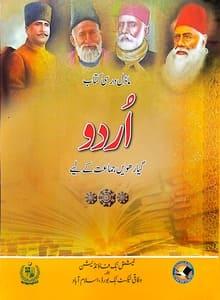
Master Class 11 Urdu (HSSC-I) with the latest SLO-based solved notes covering حصہ نثر (Prose), حصہ نظم (Poetry), and حصہ غزل (Ghazal) — chapter summaries, MCQs, short questions, long questions, and PDF downloads aligned with the NBF textbook.
Federal BoardClass 11HSSC-IUrduUrdu MediumSession 2026-2027SLO BasedSNC AlignedNBF TextbookChapter-Wise Notes
Quick Answer
These Class 11 Urdu solved notes for Federal Board (FBISE) provide students with comprehensive, SLO-based exam preparation material covering all three sections of the NBF textbook. Based on the latest National Book Foundation (NBF) textbook, this resource includes chapter-wise solved textbook exercises, conceptual MCQs, short-answer questions, and detailed long-answer questions for حصہ نثر (prose), حصہ نظم (poetry), and حصہ غزل (ghazal) for high scores in the HSSC-I board exams.
Chapter-Wise Urdu Notes
Select any chapter to read online or download the PDF notes for exam preparation.
حصہ نثر — Chapter 1
اخلاقِ حسنہ (سیرت نگاری) — شبلی نعمانی
Explores the virtues of noble character (Akhlaq-e-Hasna) as portrayed in the life of the Holy Prophet ﷺ, written by the celebrated scholar Shibli Nomani. Notes include key themes, literary analysis, definitions, MCQs, and short and long questions for FBISE exams.
A satirical short story (afsana) by Saadat Hasan Manto exploring the socio-political confusion following the introduction of a new law. Notes include character analysis, central theme, writer background, solved exercises, MCQs, and exam-focused questions.
تاریخ کا کفن (سندھی ادب سے ترجمہ) (افسانہ) — امر جلیل
A translated short story from Sindhi literature by Amar Jaleel, depicting the burial of history and the weight of the past on present generations. Notes include literary analysis, translation context, theme explanation, MCQs, short and long questions.
A one-act play (drama) by Amjad Islam Amjad dealing with human relationships, emotional boundaries, and the threshold between decisions. Notes include dramatic elements, character analysis, theme, dialogue significance, MCQs, and board-exam questions.
An excerpt from Khadija Mastoor's celebrated novel depicting the partition of the subcontinent and the events leading to the creation of Pakistan. Notes include historical context, narrative analysis, writer biography, MCQs, and exam-focused questions.
ایک استاد عدالت کے کٹہرے میں (آپ بیتی) — اشفاق احمد
An autobiographical account (aap beeti) by Ashfaq Ahmed narrating a personal encounter in a court of law, reflecting on justice, dignity, and the social role of a teacher. Notes include autobiographical genre features, theme analysis, MCQs, and board questions.
Selected letters (makateeb) of the legendary Urdu poet Mirza Ghalib, revealing his wit, humor, literary style, and personal reflections. Notes cover letter-writing style, language features, Ghalib's personality, MCQs, short questions, and detailed exam answers.
An essay (mazmoon) by Khwaja Hasan Nizami reflecting on fasting during poverty, blending spiritual insight with social commentary. Notes include essay genre features, theme, writer background, central idea, MCQs, and exam-oriented questions.
پاکستانی زبانیں اور ان کا باہمی رشتہ (مضمون) — محمد رشید / ممتاز منگوری
An informative essay on the linguistic diversity of Pakistan and the mutual relationship between Pakistani languages. Notes include key arguments, linguistic concepts, vocabulary, MCQs, short and long questions for FBISE HSSC-I Urdu.
A humorous and satirical essay (tanz o mazah) by Rasheed Ahmed Siddiqui on the charpai — a symbol of Pakistani rural life — through wit and cultural observation. Notes include satirical genre features, humor techniques, theme, MCQs, and exam questions.
A hamd (poem in praise of Allah) by Hafeez Taib, beautifully expressing devotion, gratitude, and the majesty of the Creator. Notes include literary devices, central theme, stanza analysis, definitions, MCQs, and board-exam short questions.
A naat (poem in praise of the Holy Prophet ﷺ) by Syed Nafees Shah, expressing deep reverence and love for the Prophet. Notes include poetic analysis, key themes, literary expressions, MCQs, short questions, and exam preparation material.
A patriotic national song (milli nagma) by Ahmed Nadeem Qasmi celebrating love for Pakistan and national unity. Notes include patriotic themes, poetic devices, stanza-by-stanza analysis, MCQs, and FBISE board exam questions.
A poem by Allama Iqbal addressing the Valley of Lolab in Kashmir, interweaving themes of natural beauty, spiritual longing, and the Muslim identity. Notes include Iqbal's philosophy, poetic analysis, word meanings, MCQs, and long questions.
A humorous poem (tanz o mazah) by Syed Muhammad Jafri satirizing social pretensions around dining and hospitality. Notes include satirical elements, humorous tone, word meanings, MCQs, short questions, and exam-focused material.
A poem by Ehsan Danish exploring the true meaning of freedom — not merely political but spiritual and intellectual liberation. Notes include thematic analysis, poetic devices, stanza meanings, MCQs, short questions, and detailed board answers.
An Urdu rendition of selected verses by Pashto poet Rahman Baba, compiled and presented by Professor Amjad Iqbal, celebrating themes of love, mysticism, and human dignity. Notes include cultural context, poetic analysis, MCQs, and exam questions.
A celebrated ghazal by Mir Taqi Mir — the greatest name in classical Urdu poetry — filled with deep pathos, imagery of separation, and lament over unfulfilled love. Notes include ghazal analysis, literary devices, word meanings, MCQs, and board questions.
سر میں سودا بھی نہیں دل میں تمنا بھی نہیں — فراق گورکھ پوری
A thought-provoking ghazal by Firaq Gorakhpuri reflecting on a state of emotional emptiness and philosophical detachment. Notes include mood analysis, literary devices, verse-by-verse meaning, MCQs, and short and long questions.
A lyrical ghazal by Munir Niazi capturing restlessness, existential anxiety, and the search for peace. Notes include Niazi's distinctive style, thematic analysis, verse meanings, poetic devices, MCQs, and exam-focused questions.
A heartfelt ghazal by Ahmed Faraz — the romantic voice of modern Urdu poetry — exploring themes of farewell, broken bonds, and lingering grief. Notes include romantic imagery, verse analysis, literary devices, MCQs, and board exam questions.
A delicate ghazal by the celebrated poet Parveen Shakir, using flower imagery to express hope, anticipation, and fragile emotions. Notes include Shakir's poetic style, verse meanings, literary analysis, MCQs, short questions, and detailed long answers.
Studying Urdu in Class 11 under the Federal Board of Intermediate and Secondary Education (FBISE) requires a deep appreciation of classical and contemporary Urdu literature across three distinct genres: prose (حصہ نثر), poetry (حصہ نظم), and ghazal (حصہ غزل). With the implementation of the Student Learning Outcomes (SLO) system, exam questions are designed to test conceptual understanding, literary analysis, and the ability to express ideas clearly. These Urdu notes are specifically designed to address these requirements, breaking down complex literary texts into simple, structured, and easy-to-understand explanations for every chapter and poem.
These HSSC-I Urdu notes follow the latest Single National Curriculum (SNC) and are aligned with the textbook published by the National Book Foundation (NBF) for the session 2026-2027. The prose section covers 10 chapters spanning seerah-writing, short stories, drama, novel excerpts, autobiographies, letters, and essays by writers such as Shibli Nomani, Saadat Hasan Manto, Mirza Ghalib, and Ashfaq Ahmed. The poetry section contains 7 poems including hamd, naat, patriotic poetry, and philosophical verse by Allama Iqbal and Ehsan Danish. The ghazal section presents 5 ghazals from Mir Taqi Mir, Ahmed Faraz, and Parveen Shakir, among others.
Whether you are looking for quick revision materials, solved textbook exercises, or detailed literary analyses of important prose and poetry pieces, this comprehensive guide has everything you need. Students can read the notes online or download the chapter-wise PDF copies for offline study, making it one of the most versatile and helpful resources for Grade 11 Urdu students in Pakistan preparing for Federal Board HSSC-I annual examinations.
What Are These Urdu Notes?
Our Class 11 Urdu notes are high-quality, SLO-based educational resources curated specifically for Pakistani students preparing for FBISE HSSC-I examinations. They serve as a complete study companion that complements the NBF textbook, filling the gaps between reading literary texts and performing well in board exams.
We have structured these notes to target the specific patterns of Federal Board Urdu exams. Key literary terms are clearly defined, writer and poet backgrounds are summarized, themes and motifs are analyzed, and exam-focused questions are included to help students secure maximum marks in both the objective and subjective portions of the paper across prose, poetry, and ghazal sections.
Here is a quick look at the learning resources included in these comprehensive chapter-wise notes:
Chapter summaries and prose/poem overviews
Writer and poet biographies
Key concepts and literary analysis
Solved textbook exercises
Conceptual MCQs
Short-answer questions
Detailed long-answer questions
Important comparisons and genre differences
Word meanings and literary devices
SLO-based practice questions
Exam-focused revision points
Using these resources, students can master each chapter and feel confident on exam day.
What Is Included in the Notes?
Students can use the chapter-wise material to access the following learning resources:
✓
Solved Exercises
Complete step-by-step solutions to all textbook review questions and exercises from the NBF Class 11 Urdu book.
A
MCQs
Conceptual and textbook-based multiple-choice questions with correct answers and explanations for FBISE Urdu exam preparation.
Q
Short Questions
SLO-based short questions designed to test your understanding of literary texts, themes, characters, and writer styles.
L
Long Questions
Detailed, structured long answers with proper headings and analytical points for Federal Board Urdu subjective paper preparation.
D
Definitions
Clear, concise definitions of key literary terms, genres (afsana, drama, maqala, ghazal, hamd, naat), and Urdu vocabulary used in the syllabus.
◎
Diagrams
Relevant charts, comparison tables, and structured visual aids for literary genre differences, narrative structures, and poetic forms.
★
SLO-based Questions
Higher-order thinking questions to prepare you for the latest FBISE SLO-based Urdu exam style, focusing on literary analysis and critical thinking.
↓
PDF Download
Easily download the chapter-wise solved Urdu notes in high-quality PDF format for free offline exam preparation.
SNC and National Curriculum Alignment
These Class 11 Urdu notes are 100% aligned with the Single National Curriculum (SNC) and follow the Student Learning Outcomes (SLO) framework mandated by the Federal Board (FBISE) for the session 2026-2027. All topics — from the prose writings of Shibli Nomani, Manto, and Ashfaq Ahmed to the poetry of Allama Iqbal, Parveen Shakir, and Mir Taqi Mir — strictly adhere to the educational standards set by the National Book Foundation (NBF), preparing students effectively for the cognitive demand levels of HSSC-I Urdu board examinations.
How to Prepare Class 11 Urdu from These Notes
Follow this simple preparation method to get better results in Urdu.
1
Read the textbook chapter first
Start by reading the prose chapter, poem, or ghazal from your NBF Urdu textbook to build basic familiarity with the text, vocabulary, and style of each writer or poet.
2
Revise key concepts
Use the detailed summaries, literary analyses, and writer biographies in our notes to solidify your understanding of themes, narrative styles, and poetic devices.
3
Solve MCQs
Test your knowledge by practicing the conceptual MCQs at the end of each chapter note to strengthen your objective paper preparation for the FBISE Urdu exam.
4
Prepare short questions
Focus on the short-answer questions to practice writing concise, clear, and direct answers about literary themes, characters, and important passages.
5
Prepare long questions
Study the long questions to learn how to structure comprehensive literary answers with proper headings, textual evidence, and analytical points for the subjective paper.
6
Practice diagrams
Review comparison charts and genre tables for prose types (seerah, afsana, drama, ناول, maqala, makateeb), poetry forms (hamd, naat, nazm, ghazal), and literary devices.
7
Revise before tests and board exams
Use the quick revision points, key themes, and literary definitions to refresh your memory right before Federal Board examinations.
Related Resources
Use these resources to complete your Urdu preparation and other subjects.
کیا یہ نوٹس فیڈرل بورڈ (FBISE) کے تازہ ترین نصاب پر مبنی ہیں؟
جی ہاں، یہ نوٹس 2026-2027 سیشن کے لیے اپ ڈیٹ کیے گئے ہیں اور ایس ایل او پر مبنی نیشنل بُک فاؤنڈیشن (NBF) کے نصاب کے مطابق ہیں۔
Are these Class 11 Urdu notes based on the latest NBF syllabus?
Yes, these notes are fully updated for the 2026-2027 session and are aligned with the National Book Foundation (NBF) textbook for Class 11 Urdu under FBISE.
What does SLO-based notes mean for Federal Board Urdu students?
Student Learning Outcomes (SLO)-based notes focus on conceptual learning, literary analysis, and critical thinking rather than rote memorization, helping students tackle the analytical questions in FBISE Urdu papers.
Can I download the Class 11 Urdu solved exercises PDF?
Yes, you can download the PDF files for solved exercises, MCQs, and notes of each chapter individually from their respective chapter links on this page.
Do these notes cover all three sections of the NBF Class 11 Urdu book?
Yes, all three sections of the FBISE Class 11 Urdu syllabus are covered — حصہ نثر (10 prose chapters), حصہ نظم (7 poems), and حصہ غزل (5 ghazals) — with complete notes for each entry.
Is the content aligned with the Single National Curriculum (SNC)?
Yes, the syllabus is fully aligned with the Single National Curriculum (SNC) guidelines adopted by the Federal Board of Intermediate and Secondary Education for HSSC-I Urdu.
Are solved MCQs included in the Class 11 Urdu notes?
Yes, each chapter notes page includes solved multiple-choice questions, covering both textbook exercises and additional conceptual board-level questions for prose, poetry, and ghazal sections.
Are the long questions structured for board exam marking schemes?
Absolutely. The long questions are structured with proper headings, literary analysis, textual references, and bullet points to help students secure full marks in the subjective paper.
Can Punjab Board students use these FBISE Urdu notes?
Punjab Board students may use these notes to study overlapping Urdu literary topics, but they should prepare primarily according to their own prescribed textbook and syllabus since the NBF and Punjab curricula differ.
Are these notes helpful for weak students who struggle with Urdu literature?
Yes, these notes break down complex literary Urdu texts into simple summaries, character analyses, theme explanations, definitions, and structured question-answers, making them accessible to students of all learning levels.
What is the difference between SSC and HSSC for Urdu?
SSC refers to Secondary School Certificate (Class 9 & 10), while HSSC refers to Higher Secondary School Certificate (Class 11 & 12). These notes are for HSSC-I (Class 11) Urdu under FBISE.
Are these notes enough for complete Class 11 Urdu exam preparation?
The notes are excellent for learning and revision, but students should also read the official NBF textbook, complete all textbook exercises, and solve FBISE past papers and model papers for comprehensive preparation.
Can I read the Class 11 Urdu notes online for free?
Yes, all chapter-wise Urdu notes on StudyPlusPlus are 100% free to read online. No login or registration is required.
Are Class 11 Urdu notes the same as HSSC-I Urdu notes?
Yes. Class 11 belongs to HSSC-I (Higher Secondary School Certificate Part I). These notes are specifically designed for HSSC-I Urdu under the Federal Board.
How do I download notes for a specific chapter of Class 11 Urdu?
Select the chapter from the chapter list on this page to navigate to that chapter's page, where you will find the direct PDF download option along with online reading material.
Educational Notice: This content is provided for educational support only. It is not for sale, redistribution, or commercial use. StudyPlusPlus is not claiming official ownership of any government textbook material.